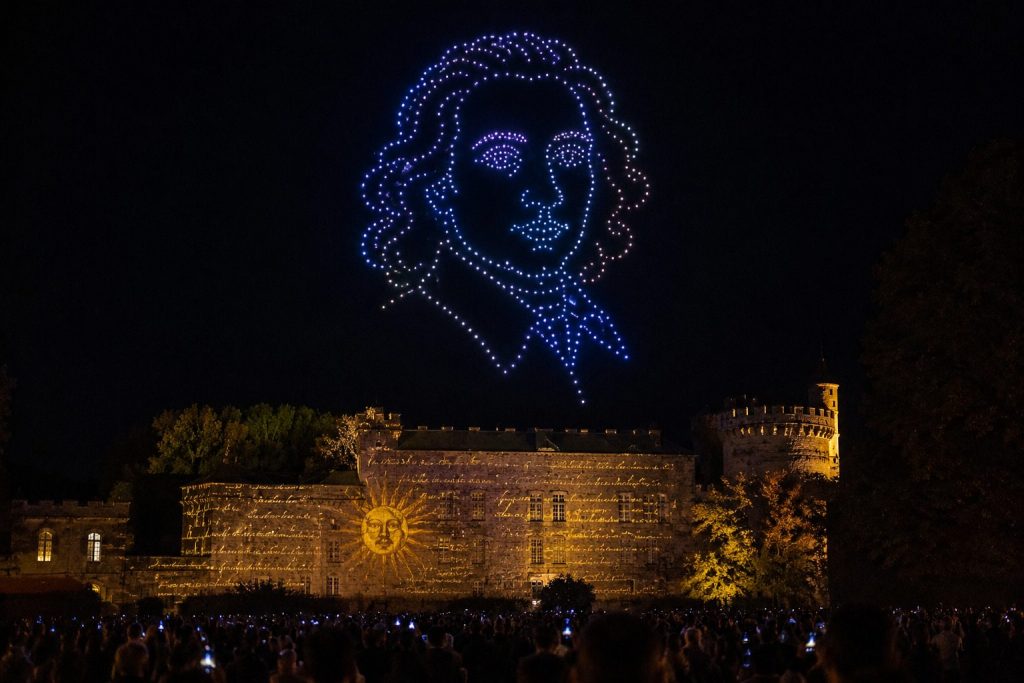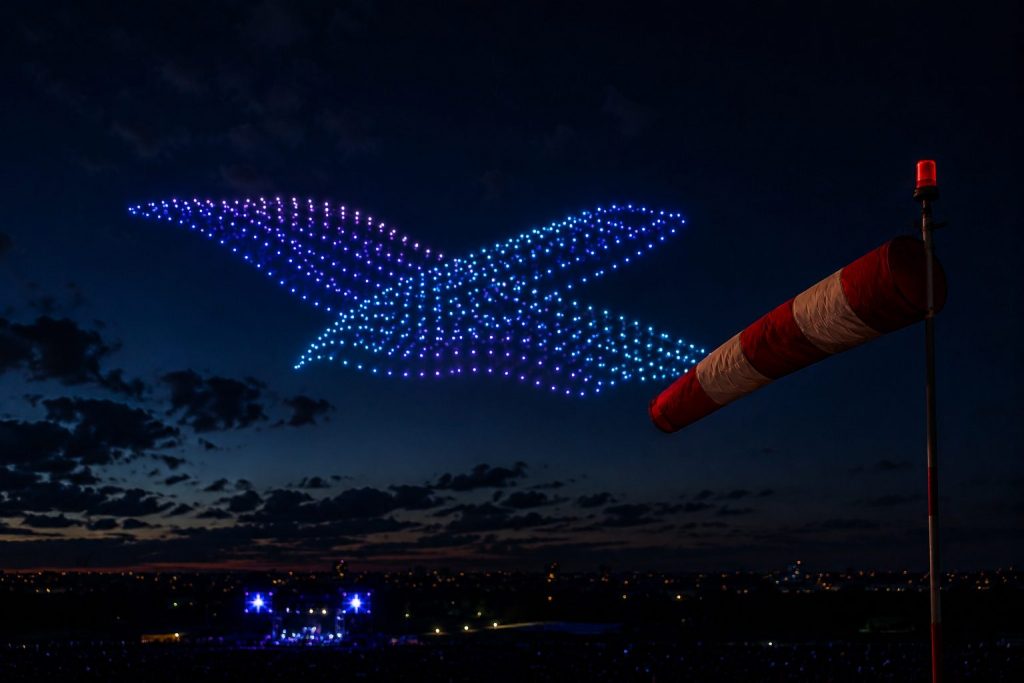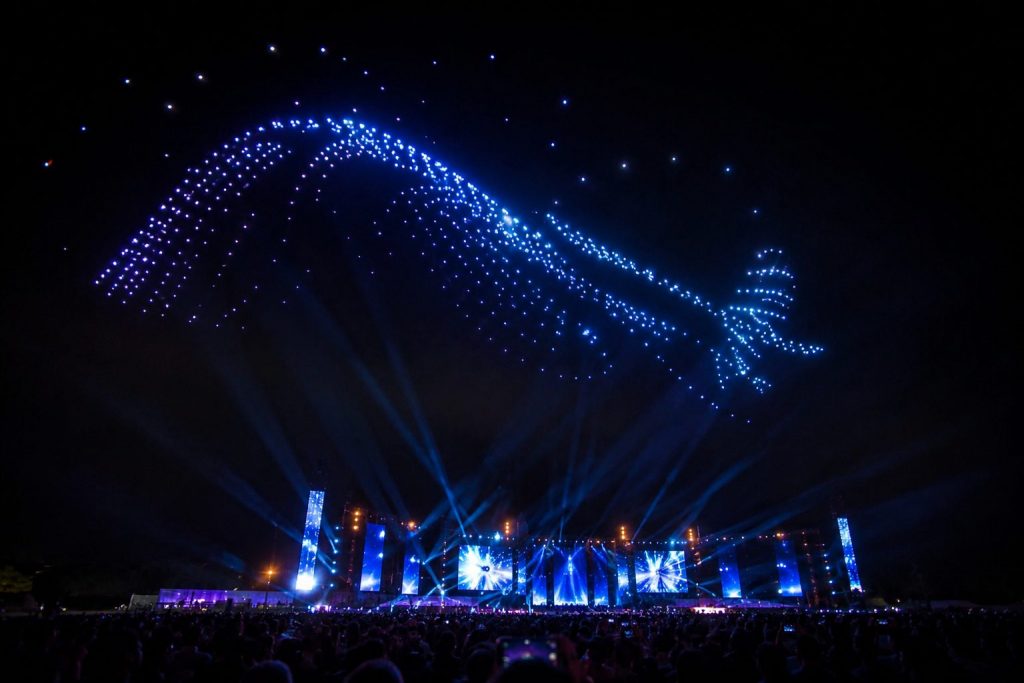


The creation of a visual drone animation involves art and technology. Stellair combines cutting-edge technical expertise with artistic sensibility to bring to life animations that leave a lasting impression. Take a behind-the-scenes look at this creative alchemy, as we take you from an abstract concept to a luminous choreography of multiple drones.
Focus on the creative conceptualization phase
All visual drone animation begins with a conceptualization phase, in which the imagination takes over before the technique comes into play. This stage determines the artistic identity and emotional impact of the final animation. The creative brief is the starting point for the project. A meeting with the customer enables us to understand the objectives, the message to be conveyed, the target audience and the desired visual universe. Our team asks the right questions to pinpoint expectations: is it to celebrate an event, tell a story, represent a brand identity or create a purely aesthetic experience? It’s this questioning phase that feeds the creative thinking to come.
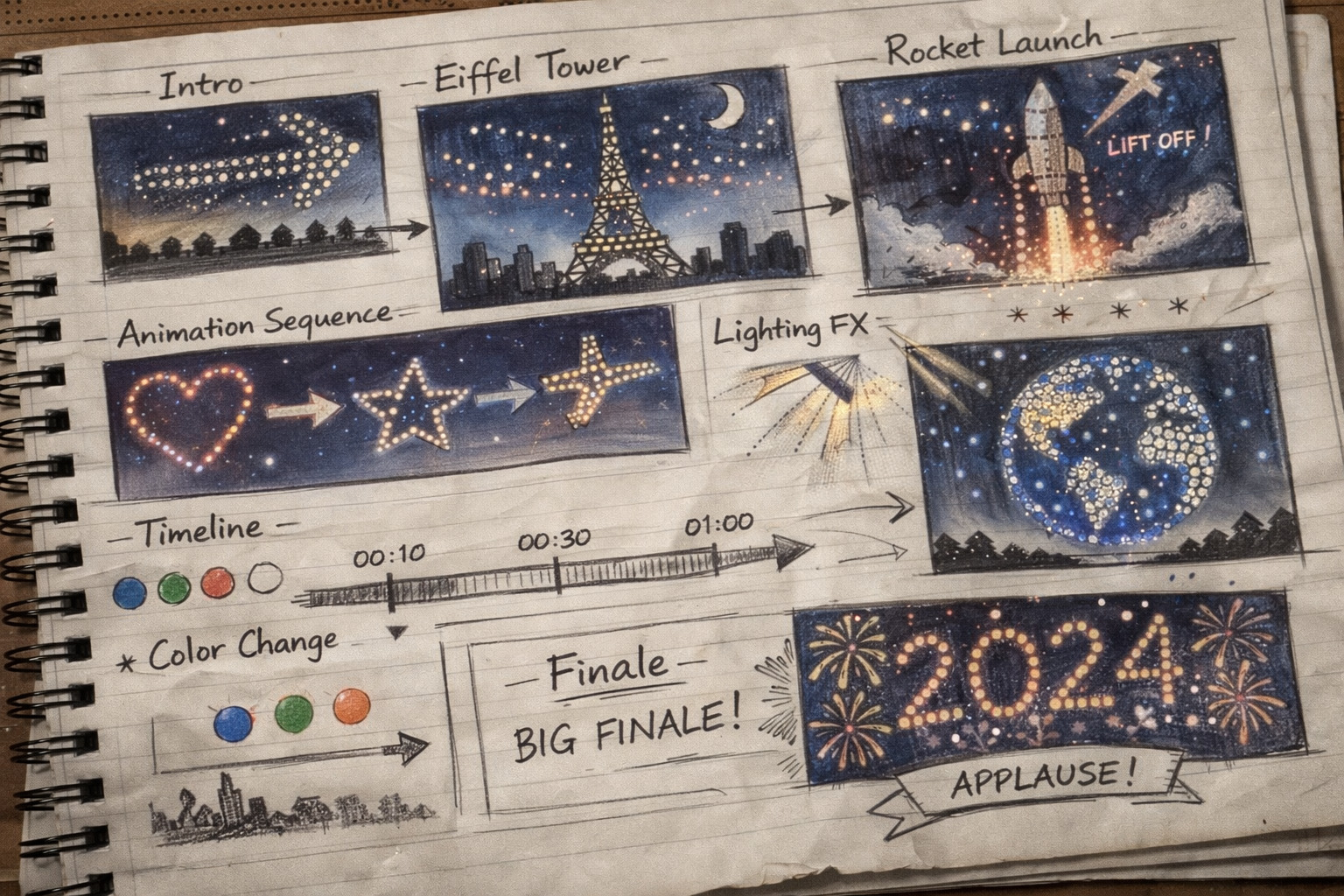
The search for visual inspirations explores a variety of universes to enrich the creative palette: references can come from contemporary art, cinema, nature, your corporate culture or a local event for a community animation. In terms of narrative, you can opt for a linear story, telling it from beginning to end, or choose a theme, exploring variations around a central motif. The first visual sketches translate these abstract concepts into concrete representations. At this stage, technical feasibility is not yet the priority: the idea is to freely explore the field of possibilities before confronting ideas with real-life constraints, particularly in an urban environment.
How do you go about translating the concept into technical terms?
Once the creative concept has been validated, the technical translation phase begins, transforming the artistic ideas into specifications that can be implemented by the drones. Do the transitions respect the aircraft’s speed and acceleration limits? Are the lighting effects required compatible with available LED systems? The definition of the flight area must take into account regulatory constraints on maximum altitude, exclusion zones and the optimum viewing angle for the public. As for time planning, it breaks down the animation into chronological sequences: formations, transitions and lighting effects are assigned a specific duration. The detailed chronology serves as a reference for the rest of the creative process. It also takes into account initial positioning and return to the ground.
Training modelling and trajectory programming
Specialized drone show design software is used to create visual formations. These tools enable you to think about the placement of drones in space, visualize formations from all angles, and simulate movements in real time. Trajectory programming is the technical heart of drone animation creation. Algorithms calculate the optimal path for the drone to follow to reach its positions, considering each device individually while taking all others into account to avoid collisions. The optimization of trajectories integrates several criteria: minimum duration, optimized energy consumption, visual fluidity and safety.
For its part, the management of physical constraints takes into account the actual limitations of UAVs. Maximum speeds, accelerations, radii of curvature and system response times are all parameters that constrain possible trajectories. Respecting these limitations ensures that the programmed movements are actually achievable by real aircraft. Collision avoidance is a major algorithmic challenge when dozens of UAVs are operating simultaneously in a shared space. Additional safety margins compensate for positioning inaccuracies and external disturbances such as wind.
Finally, energy optimization prolongs autonomy by minimizing unnecessary maneuvers and movements. Trajectories are calculated to favor smooth, progressive movements rather than brutal, energy-hungry accelerations. This extends show times or reduces the number of batteries required.
From synchronization to testing
The emotional impact of a drone animation is amplified when aerial movements are synchronized with the right soundtrack. The selection or creation of music contributes to the universe of the show. Depending on your project, this can be either existing music or custom-made creations. In all cases, the music chosen should present a rhythmic and emotional structure that naturally dialogues with the visual possibilities of the drones. Variations in intensity, crescendos, breaks and silences offer opportunities for synchronization with the show. You can also opt for complementary sound effects to enrich the auditory experience, such as spatialized sounds that follow the drones’ movements.
No animation is definitively finished until it has gone through the testing and adjustment phases, which fine-tune all the parameters to perfection. Simulations are the first validation step. Design software simulates the complete animation under virtual conditions, enabling the final result to be viewed from all angles and any problems to be identified before the actual tests. These simulations verify the absence of collisions, the visual coherence of formations and the fluidity of transitions. They also allow us to test different variants and optimize creative choices. Rehearsals with the final fleet represent the final validation stage. Several rehearsals may be necessary to achieve the fluidity and precision required for a professional performance.
Continuous improvement and optimization: a determining factor
The creative process doesn’t end with the first successful execution. Performance analysis and feedback feed a continuous improvement process that enriches know-how. For example, feedback from the technical team provides valuable insights into the difficulties encountered, improvised solutions and desirable improvements. Similarly, analysis of the audience’s reactions assesses the emotional impact of the animation: the moments that arouse the most wonder, those that create surprise, and so on.
Creating visual animations with drones is a passion that drives our team. Our complete mastery of the creative chain, from brainstorming with the customer to final execution, enables us to transform your dreams and ideas into original aerial shows. Our collaborative approach involves our customers at every stage of the creative process, guaranteeing a final result that lives up to expectations. Our technical and artistic know-how combines rigor and boldness to push back the boundaries of this new form of entertainment and communication. Contact us and entrust us with the creation of your next visual drone animation, for magical moments forever etched in hearts and memories!